Escape Stories Channel Case Study: Breakfiles at 43 Films
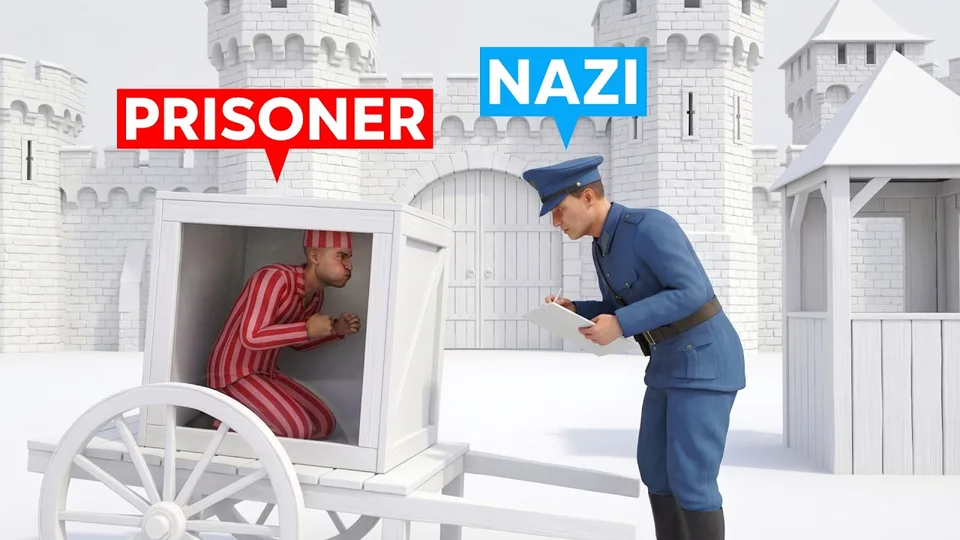
Breakfiles is what happened when we cloned the Blackfiles system onto a single premise: people escaping places no one escapes. Forty-three films later it sits at 37.1K subscribers and 4.4 million views. This is an escape stories channel case study written by the operators of the channel — real numbers, real conventions, and the parts most teardowns leave out.
Single-premise channels terrify creators for one reason: the fear of running dry. Forty-three films in, we can report that the premise was never the constraint. The discipline around it is.
Here is the full teardown: the numbers, how one idea sustains variety, the packaging formula, what our biggest outlier taught us, and where the channel honestly lags.
The Numbers Behind This Escape Stories Channel Case Study
The raw stats first. Breakfiles covers prison escapes and impossible getaways: 37.1K subscribers, 4.4 million views, 43 films. Every episode runs 20 to 37 minutes, built on 16 to 20 hours of research, narrated with directed AI voice, and animated entirely in original 3D — zero stock footage. It uploads weekly, like every channel in our network.
Do the division and the channel averages roughly 102,000 views per film. That average hides a familiar shape: a long floor of steady performers and one towering outlier — "The Man Who Escaped a Nazi Camp and Returned to Save 100 Men" at 443K views. One film accounts for roughly 10% of everything the channel has ever done.
For honest context: Blackfiles, our flagship, averages around 420,000 views per film across 126 videos. Breakfiles is the smaller sibling, and that is exactly why it is worth tearing down. What works at 436K subscribers is survivorship bias; what works at 37K is a system you can actually copy.
One Premise, 43 Films: Why "Escape" Never Runs Dry
The obvious objection to a single-premise channel: how many escape stories can there be? More than you will ever produce. A premise is not a topic — it is an engine, and an engine has axes of variation. Breakfiles rotates through at least five.
- Era. A WWII camp breakout and a modern prison escape are the same premise in completely different worlds — different technology, different guards, different rules.
- Geography. Prisons, camps, borders, islands. Each setting imposes its own physics on an escape and rewrites the problem from scratch.
- Method. Tunnels, impersonation, forged paperwork, raw patience. The "how" is the spine of the second act, and it almost never repeats.
- Moral position. Sometimes the escapee is a hero breaking out of a Nazi camp; sometimes a convict outsmarting a system built to hold him. The viewer's allegiance flips, and that flip keeps the format fresh.
- Stakes. Escaping to survive is one story. Escaping and going back in to save 100 men is another one entirely.
Our internal bar, applied before we launch any channel: name well over 100 producible stories before making the first film. Escape cleared that bar easily — recorded history is essentially a catalog of people getting out of places they were never supposed to leave.
Packaging Conventions: The Breakfiles Formula
At Sentris Media Group, packaging is decided before production. If we cannot write a title that stops a scroll and a thumbnail concept that pays it off, the story does not get made — on any channel. On Breakfiles, 43 films have hardened that discipline into four conventions.
- Person-first titles. "The Man Who..." puts a human at the front of every promise. People click on people, not on events.
- Two-act titles. Our best performer does not stop at "Escaped a Nazi Camp." It adds "and Returned to Save 100 Men." The first act earns curiosity; the second act makes the click non-optional.
- Numbers as proof. "100 men" signals research, not hype. A specific number tells the viewer we did the work before they pressed play.
- One tension per thumbnail. A single subject, a single readable conflict, legible at postage-stamp size. Our packaging lab, Thumbnailer, exists to pressure-test exactly this before anything ships.
None of these conventions are secret. The pattern is copyable; the specifics are not. "Returned to save 100 men" came out of 16 to 20 hours of research, and that detail is what does the converting.
What One 443K Outlier Did for a 37K-Sub Channel
"The Man Who Escaped a Nazi Camp and Returned to Save 100 Men" pulled 443K views — about 4.3 times the channel's per-film average, on a channel with 37.1K subscribers. The ratio matters more than the raw number. It means the film traveled far beyond our subscriber base, which is the entire job of an outlier on a small channel.
At this scale an outlier does three jobs at once. It recruits subscribers who then watch the back catalog. It validates the premise to the algorithm — and, frankly, to the team. And it becomes curriculum: we broke down why that title and that structure outperformed, and the findings now shape how we package every escape story that follows.
The mistake we see constantly is treating an outlier as a lottery ticket instead of a template. When a film outperforms by 4x, the channel is telling you what it wants to be. Listen to it.
The Honest Part: Where the Smaller Channel Lags
Now the part most case studies skip. Breakfiles averages roughly 102K views per film; Blackfiles averages around 420K. Same ~25-person team, same in-house tools, same weekly cadence, same production bar. The gap is the niche: cybercrime and espionage simply has a broader demand pool than escape stories, and no amount of craft erases that.
A weekly cadence also means the premise gets stress-tested every single week. Some weeks the catalog serves up a story with a built-in two-act title; some weeks the team digs for the angle that makes film 44 feel different from film 12. That dig is the real cost of a single-premise channel — not running out of stories, but running out of easy ones.
We keep the channel because the math still compounds. Forty-three films is a library that earns views around the clock, every release teaches the whole network something, and a focused premise builds subscribers who know exactly what they signed up for. Depth beats breadth — as long as you priced in the lower ceiling before you started.
Lessons for Your Own Single-Premise Channel
We extract the lessons explicitly, because that is the point of a teardown. These are the five we would carry into any single-premise channel, in any niche.
- Pick a premise with at least three variation axes. Era, method, and moral position carried Breakfiles much further than "prison escapes" suggests on paper.
- Name 100 stories before you film one. If the list stalls at 30, you have a series, not a channel.
- Lock packaging conventions early. Person-first framing, two-act titles, numbers as proof, one tension per thumbnail. Conventions compound; weekly reinvention does not.
- Treat outliers as curriculum. Your 4x film is the channel telling you what it wants to be. Study it, template it, repeat it.
- Benchmark against your own trajectory. Breakfiles "loses" to Blackfiles on every raw metric and is still a healthy, compounding asset. Compare your film 43 to your film 13, not to someone else's flagship.
FAQ: Escape Stories Channel Case Study
Is 37.1K subscribers across 43 films good? It works out to roughly 860 subscribers per film and about 118 views for every subscriber. For a young channel in a tightly focused niche, that is a healthy base — just do not measure it against a flagship playing in a broader demand pool.
Will a single-premise channel run out of ideas? Not if the premise has variation axes. Escape stories rotate across era, geography, method, moral position, and stakes — the constraint we actually hit is finding the fresh angle, not finding the story.
Do these packaging conventions work outside true-story niches? The structures transfer: person-first framing, two-act titles, numbers as proof. The specificity does not transfer, and specificity is what separates a great title from clickbait. You still have to do the research.
Where does the full system live? The playbook behind this teardown — niche selection, packaging, cadence, retention — is what we teach inside Sentris Academy: the Blueprint tier ($997) covers the full system, and the Studio tier ($1,997) adds weekly calls with our team until your first 100K subscribers.
Want the whole system, not just the notes?
The Sentris Academy is the operating manual behind our 500K+ subscriber network — every stage of the pipeline this article comes from.