Grow a YouTube Channel From Zero: The 436K Blackfiles Playbook
Blackfiles launched in February 2025 with zero subscribers, zero views, and one thesis: cybercrime and spy stories deserved real documentary treatment, not slideshow narration over recycled stock footage. Sixteen months later, the channel sits at 436K subscribers, 53 million views, and 126 published films. No host on camera. No viral fluke. Just a system that never missed a week.
If you want to grow a YouTube channel from zero, you will find no shortage of advice — most of it from people who grew one channel once, years ago, or never at all. This is different. This is the operating log of our flagship, written by the team that shipped it, with the real numbers attached.
The playbook has five parts: the niche call, the cadence, the packaging, the retention loop, and what we did once the system proved itself. Here is each one.
To Grow a YouTube Channel From Zero, Pick a Niche That Scales
We didn't pick cybercrime and espionage because we loved the genre — though we do. We picked it because it passed three tests that most niches fail.
- Story depth. Decades of declassified cases, court records, and investigative reporting. We could name well over 100 stories before producing a single one.
- Evergreen demand. A burglary from decades ago pulls views today. Nothing in the catalog expires, so every film keeps earning.
- An open quality lane. The space was crowded with low-effort content. Documentary-grade treatment was the gap, and we drove straight into it.
A niche is not a topic — it's a promise you can keep. Blackfiles promises a true cybercrime or spy investigation, told like a film, every single week. We're 126 videos in and the story archive is still deep. If you can't list 100 episodes before you make your first, you've picked a hobby, not a channel.
One Film a Week, 20 to 37 Minutes, No Exceptions
Cadence is where most channels die. Weekly uploads sound simple until you price out what a single Blackfiles film actually costs: 16 to 20 hours of research before one line of script exists, then original 3D animation — no stock footage, ever — and a directed AI voice performance edited like an actor's takes.
You don't sustain that with willpower. At Sentris Media Group, we run a roughly 25-person in-house team on a production line, supported by tools we built ourselves: Scriptwriter turns research into structured scripts, Vertex powers our generative video and image pipeline, Cortex orchestrates the whole production so nothing slips, and Thumbnailer handles packaging tests. We built them because nothing off the shelf survived weekly documentary cadence.
The uncomfortable truth: consistency beats brilliance. A strong film every week compounds. A masterpiece every two months doesn't. The algorithm rewards the channel that shows up, and the audience builds a habit around it.
Packaging Discipline: Win the Click Before You Earn the Watch
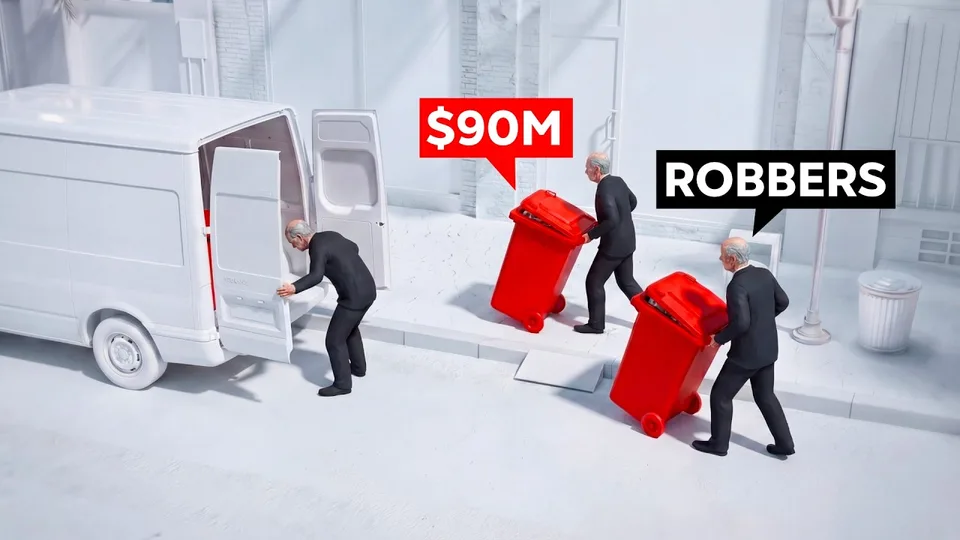
Our biggest Blackfiles film, "The FBI Agent Who Warned Everyone About 9/11," has 482K views. Another, "The Grandpas Who Pulled Off the Biggest Burglary EVER," has 286K. Read those titles again. Each is a person plus an impossible fact. That's not an accident — it's a format we enforce before anything gets made.
Packaging gets decided before production, not after. If we can't write a title that stops a scroll and a thumbnail concept that pays it off, the story doesn't enter the pipeline — no matter how good the research is. Guessing on packaging after the fact is gambling with weeks of production work, which is exactly why we built tooling to test thumbnails instead of arguing about them.
The rule: the idea, the title, and the thumbnail are one decision. A great film with weak packaging is invisible. A weak film with great packaging is a broken promise the audience remembers. You need both, in that order.
Let Retention Data Make the Creative Calls
Long-form only works if people stay. Our films run 20 to 37 minutes, which means every retention graph is a brutal, honest review of our storytelling. We read them every week, on every film.
When a cold open holds attention, that structure becomes the template. When a mid-film segment sags, that segment style dies — even if we loved making it. When a topic over-performs, we go deeper into that vein instead of chasing something new. The data picks the direction; we supply the craft.
This is the actual growth loop: ship weekly, read retention, kill what sags, double down on what holds. Most creators argue with their data. We treat it as the only film critic that matters, because it's the aggregate verdict of every viewer who voted with their time.
From One Channel to a Four-Channel Network
Once Blackfiles proved the system, we cloned it. Breakfiles covers prison escapes: 37.1K subscribers, 4.4 million views, 43 films. Outplayed covers heists and deception: 28.6K subscribers, 3.5 million views, 31 films. Outlived covers survival stories: 7.8K subscribers, 837K views, 13 films. Same team, same tools, same weekly cadence on each channel.
The proof the playbook transfers isn't the subscriber counts — it's the outliers. Breakfiles' "The Man Who Escaped a Nazi Camp and Returned to Save 100 Men" has 443K views. Outplayed's "The Man Who Tricked the Police into Robbing Millions" has 422K. Outlived, a 13-video channel with 7.8K subscribers, has a film at 475K views. The system finds audiences long before the subscriber count catches up.
Across the Sentris network: 500K+ subscribers, 60M+ views, 200+ films produced, and Blackfiles now distributing on Spotify as well. None of that was the goal when we uploaded film one. It's just what compounding output looks like 16 months in.
FAQ: Growing a YouTube Channel From Zero
How long does it take to grow a YouTube channel from zero? Blackfiles went from zero to 436K subscribers in 16 months, publishing weekly. Your timeline depends on your niche depth, your packaging, and whether you can hold cadence before anything is working. Measure progress in films shipped, not months elapsed.
Do you need a 25-person team? No. You need the loop: pick a deep niche, package before you produce, publish weekly, read retention, repeat. We scaled the team as the channels earned it — the system came first, the headcount followed.
Does "faceless" mean low effort? Across most of YouTube, yes — and that's exactly the opportunity. Our films take 16 to 20 hours of research before scripting and are built entirely from original 3D animation. Faceless just means the story is the star. The effort bar is your moat.
Can the system be learned? It's what we teach in Sentris Academy: the Blueprint tier ($997) covers the full system, and the Studio tier ($1,997) adds weekly calls with our team until your first 100K subscribers. But the playbook above is the real thing, in plain sight.
The last word: the channel is just the surface. What grew wasn't Blackfiles — it was the system underneath it: the research process, the packaging discipline, the retention loop, the tools. Channels plateau. Systems compound. Build the system, and the subscriber count becomes a lagging indicator.
Want the whole system, not just the notes?
The Sentris Academy is the operating manual behind our 500K+ subscriber network — every stage of the pipeline this article comes from.