Heist Video Case Study: Anatomy of a 422K-View Outplayed Hit
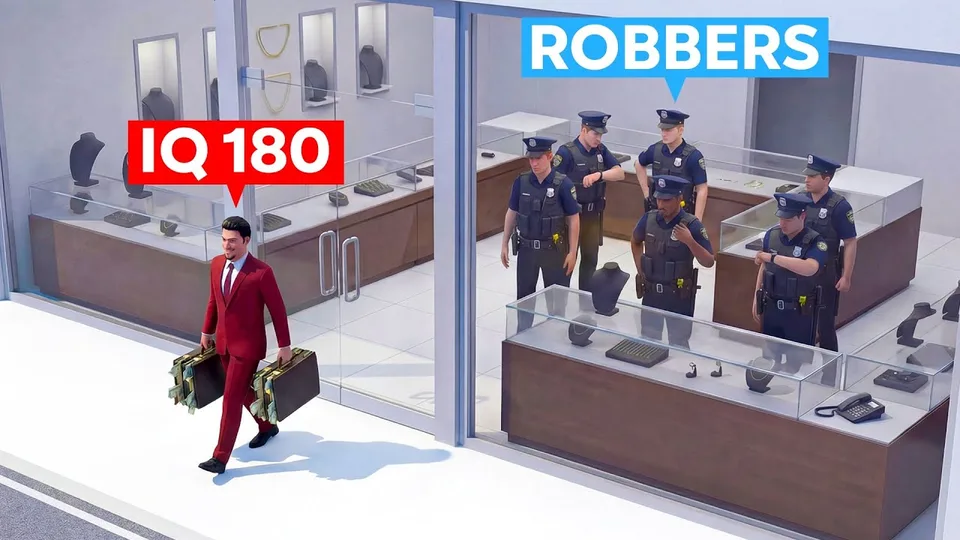
On January 13, 2026, we published "The Man Who Tricked the Police into Robbing Millions" on Outplayed, our heists-and-deception channel. As of June 2026 it sits at 422,692 views — on a channel with 28.6K subscribers. That is roughly 15 times the subscriber count, from a single 26-minute film. This heist video case study breaks down exactly why it worked.
Outplayed is one of the smaller channels in our four-channel network (500K+ subscribers, 60M+ views, 200+ films). That makes this video the perfect specimen: when a small channel produces a big number, the algorithm isn't rewarding the brand. It's rewarding the film. We're going to take it apart in three layers — the title, the protagonist, and the retention architecture.
Heist Video Case Study: The Numbers First
Before the craft talk, the raw data. Every number here is public — you can verify all of it on the watch page.
- 422,692 views in roughly five months (published January 13, 2026)
- 28.6K subscribers on Outplayed — the video did about 15x the channel's sub count
- ~12% of the channel's lifetime views (3.5M across 31 videos) came from this one film
- Roughly 3.7x the channel average of ~113K views per upload
- 26:03 runtime, squarely inside our 20–37 minute band
- 4,155 likes, just under a 1% like rate
When a video outruns your subscriber base by 15x, almost every viewer is a stranger arriving from browse and suggested. Subscribers cannot produce that number; packaging and watch behavior do. So the only questions worth asking are: why did strangers click, and why did they stay?
Title Mechanics: Nine Words That Sell a Paradox
Read the title slowly: The Man Who Tricked the Police into Robbing Millions. Nine words, and they contain a logical impossibility. Police don't rob. Your brain flags the contradiction instantly, and the only way to scratch the itch is to click.
- Person-first framing. "The Man Who..." promises a character, not a topic. Topics are skippable; people are not.
- A status inversion. One anonymous man beats an entire institution. David-versus-Goliath asymmetry is the oldest click contract in storytelling.
- An honest paradox. The title reads like clickbait but is literally true — the men who carried out the robbery believed they were law enforcement, and the getaway bus got a police salute on the way out. The story cashes the check the title writes.
Here's the control group. The same channel published "The Man Who Tricked the Police Into Delivering Millions to Him" the same month — nearly identical formula, 73K views. Our read: "delivering" is plausible (it's a ransom drop), so the paradox is weaker, and a weaker paradox lowers the ceiling. We can't fully isolate the title from thumbnail and story, and we won't pretend we can. But across 200+ films, the pattern holds: the sharper the contradiction, the higher the ceiling.
A Moral-Gray Protagonist Does the Heavy Lifting
The film tells the true story of "Mon Singh," a con artist in 1987 Mumbai. He ran a classified ad for dynamic graduates, hired 26 job seekers, issued them forged CBI credentials, and rehearsed them into a believable raid team. Then he marched them into Tribhovandas Bhimji Zaveri, one of the city's most trusted jewelers, and "confiscated" roughly $400,000 in jewelry in broad daylight. No guns, no masks, no violence. He was never caught.
Moral-gray protagonists solve the rooting-interest problem. A pure villain repels casual viewers; a pure victim story has no engine. Mon Singh is competence porn — the audience gets to admire the craft of the con without endorsing brutality, because there is none. The crime feels victimless in the moment, and then the film reminds you it wasn't: 26 real job seekers were left holding the bag.
That last beat matters more than it looks. Pure glorification caps your audience and invites backlash; acknowledging the human cost lets viewers enjoy the ride and keep their conscience. The unsolved ending does the rest — "never caught" is an open loop the viewer carries out of the video and straight into the comments.
Retention Design Inside This Heist Video Case Study
The film's structure is visible in its public chapters, and none of the placements are accidental.
- 0:00 – Intro. Sixty seconds to state the paradox and the stakes. No throat-clearing.
- 1:00 – Dynamic Graduates Wanted. The con starts with a job ad. A mundane, relatable entry point — half the audience has answered a listing like this.
- 6:58 – The Perfect Forgery. Escalation through process: how the badges, paperwork, and rehearsals were built.
- 13:13 – Daylight Robbery. The heist lands almost exactly at the midpoint of a 26-minute film.
- 21:54 – The Ghost. A four-minute final act about a man who vanished.
Most creators save the heist for the climax. We put it in the middle, deliberately. "Will he do it?" is a decent question; "how does he possibly get away with this?" is a better one, and it powers the entire second half. The back half is where casual viewers usually bail — so we hand it the strongest mystery in the story.
Underneath the structure sits the boring, expensive part: 16–20 hours of research per film, a sourced bibliography linked in the description, original 3D animation with zero stock footage, and a directed AI voice. Strangers decide within seconds whether a film feels cheap. Nothing kills a 26-minute watch faster than a recycled stock clip at minute two.
What We'd Steal From This Film
- Write the paradox first. If the title doesn't contain a contradiction the story can truthfully resolve, find a better story.
- Cast moral-gray, non-violent masterminds. Maximum rooting interest, minimum repulsion — and acknowledge the real cost on screen.
- Put the heist at the midpoint. Let the getaway, not the buildup, carry the back half.
- End unresolved when reality is unresolved. An uncaught thief is a feature, not a flaw.
- Stop blaming channel size. 28.6K subscribers was no ceiling here; story selection and packaging were the variables that mattered.
None of this is theory — it's the same checklist we run on every film across our four channels, and the same system we teach inside Sentris Academy. The uncomfortable truth is that most heist videos fail at the title stage, before a single frame is rendered. Fix the paradox first, then earn the runtime.
FAQ: Heist Video Case Study
Why did this video beat the channel's average by nearly 4x? Our honest answer: a sharper title paradox and a protagonist engineered for rooting interest. The production quality matched our other 30 Outplayed films, so quality alone doesn't explain the gap. Story selection and packaging do.
Does a small channel cap a video like this? Less than most creators believe. Browse and suggested traffic doesn't check your subscriber count; it checks whether strangers click and stay. This film pulled 15x its channel's subs, and Blackfiles did the same thing at larger scale in its first year.
How long should a heist documentary run? Ours run 20–37 minutes, and this one is 26:03. The story dictates the length — we cut to the strongest version of the narrative, not to a duration target.
Is non-graphic true crime like this advertiser-safe? Historical heists with no gore generally sit within YouTube's advertiser-friendly guidelines as of 2026, but every video is reviewed case by case and policies shift. That's a general observation, not legal or financial advice — read the current policy before you build a channel on it.
Want the whole system, not just the notes?
The Sentris Academy is the operating manual behind our 500K+ subscriber network — every stage of the pipeline this article comes from.