Viral Video Case Study: 475K Views on a 7.8K-Sub Channel
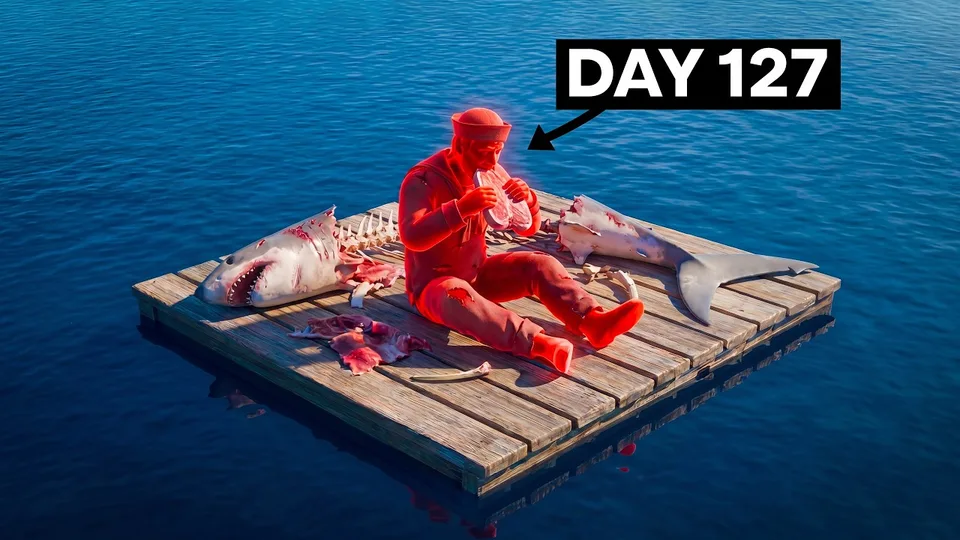
Most viral video case study posts dissect someone else's video from the outside — public stats, guesswork, and a confident conclusion. This one is different, because the video is ours. "The ONLY Person Who Survived 133 Days Stranded at Sea" has pulled 475K views on Outlived, our survival documentary channel. Outlived has 7.8K subscribers.
That's roughly 61 views for every subscriber the channel has. In this teardown we'll walk through the packaging, the story selection, the structure, and the distribution mechanics that let one film outrun its channel by two orders of magnitude. We'll also cover the part most case studies conveniently skip: what the video didn't do.
The Numbers Behind This Viral Video Case Study
Outlived is the smallest of our four channels. It covers survival stories, it has 13 videos, 7.8K subscribers, and 837K lifetime views. By every channel-level metric, it's the junior member of a network that totals 500K+ subscribers and 60M+ views.
Then there's this one film. At 475K views, it accounts for roughly 57% of every view the channel has ever generated. The other 12 videos share the remaining ~362K — about 30K each on average. This wasn't channel momentum lifting a video. It was one video escaping orbit alone.
For scale, compare it to our biggest channel. Blackfiles' most-viewed film, "The FBI Agent Who Warned Everyone About 9/11," sits at 482K views — but Blackfiles has 436K subscribers, so that's about 1.1x its sub count. The survival film did 61x. Same studio, same pipeline, wildly different ratio. That ratio is the entire reason this teardown exists.
The Packaging: A Claim One Man Can Back
Start with the title, because the title did the heaviest lifting. "ONLY" is an intensifier most creators use as decoration; here it's documented — one ship went down, one man came back, and his time adrift still stands as a record. That single word converts the title from a story into a singular event you cannot get anywhere else.
"133 days" does the second job. "Months at sea" is a vibe; 133 is a fact, and a number that specific signals research before anyone presses play. "Stranded at sea" finishes it with stakes every human understands without context — no niche knowledge required, which matters enormously when your video is being shown to people who have never heard of your channel.
Title and thumbnail ship as one unit at our studio. The title carries the claim, the thumbnail carries the emotion, and they never repeat each other. Every package runs through Thumbnailer, our in-house packaging lab, before production starts — because we write packaging before we write scripts, and if a story can't produce a title this strong, it doesn't get made.
The Story Underneath: Why This Topic Got Greenlit
The film tells the story of Poon Lim, a Chinese sailor whose British merchant ship was torpedoed in the Atlantic in 1942. He survived alone on a small wooden raft — catching fish with improvised hooks, trapping seabirds, riding out storms — until fishermen off the coast of Brazil pulled him from the water 133 days later.
We put 16-20 hours of research into every film before a script exists, and a large share of that time is spent hunting for stories that clear one bar: a documented fact strong enough to carry a title on its own. Poon Lim's 133 days is that fact. The story also came with something money can't buy — a built-in clock.
Structure: Let the Clock Do the Retention Work
Survival stories carry native structure that most genres have to manufacture. The day counter is escalation. Day 30 means something different from day 90, and the viewer always knows where they are and how much worse it can get. Our job in the edit was to protect that clock, not decorate over it.
Our films run 20-37 minutes, and a runtime like that lives or dies on the promise being restated and escalated — never padded. Original 3D animation does the other half of the work here. One man, one raft, one ocean: there is no archival footage of any of it, and generic stock waves would flatten the story into wallpaper. Animation, plus a directed AI voice performance, let us stage the moments that were never filmed — the torpedo, the storms, the rescue.
What This Viral Video Case Study Says About Channel Size
Here's the mechanic that makes a 61x outlier possible: YouTube distributes videos, not channels. Every upload gets test impressions in browse and suggested feeds, shown mostly to non-subscribers. If the packaging converts those impressions into clicks, and the film holds the viewers it earns, the system feeds it more impressions. Your subscriber count never gets a vote.
Documentaries in particular win on browse and suggested, not search. Nobody typed "Poon Lim 133 days" into YouTube. The video was recommended to people who had shown interest in survival stories, and a stranger-proof package did the rest. Subscriber count is a lagging indicator of how often you pull this off — not a gate on whether you can.
Now the uncomfortable part. The video has 475K views, and Outlived still has 7.8K subscribers. A viral one-off rents you an audience; it doesn't keep one. Viewers came for one extraordinary story, and converting them into subscribers requires a deep library that credibly promises more of the same — which a 13-video channel is still building. Anyone selling you "one viral video changes everything" is skipping this slide.
The Lessons, Extracted
After 200+ films across four channels, here is what this one taught us — stated plainly.
- Packaging is leverage that scales independent of channel size; it's the only asset a small channel has at full strength from day one
- Greenlight stories where one documented, verifiable fact can carry the entire title
- Superlatives are weapons only when they're literally true — "ONLY" worked because it is
- A built-in clock, like days adrift, is free retention structure; protect it in the edit
- One outlier rents attention; cadence and library depth convert it, so keep shipping weekly
That last point is the one we drill hardest — on our own channels, and with the creators we coach inside Sentris Academy. The outlier is proof the format works. The library is the business.
FAQ: Viral Video Case Study Questions
Can a small channel really go viral on YouTube? Yes — this film did 475K views on a channel with 7.8K subscribers, because YouTube tests every video with non-subscribers in browse and suggested. Packaging and retention decide what happens next, not channel size.
What made this video outperform the other 12 on the channel? The claim. "ONLY" plus "133 days" is a verifiable record, not just a good story, and it gave total strangers a reason to click that required zero familiarity with the channel. The other films are solid; this one is singular.
Why didn't 475K views convert into more subscribers? Because viewers subscribe to a promise of more, and a 13-video library is a thin promise. Views convert to subscribers slowly even on strong channels — the fix is cadence and depth, not a better video.
Is a result like this repeatable, or luck? You can't schedule an outlier, but you can raise the odds. Our five most-viewed films range from 286K to 482K views across four different channels, all built on the same packaging-first system — that's a pattern, not a lottery ticket.
Want the whole system, not just the notes?
The Sentris Academy is the operating manual behind our 500K+ subscriber network — every stage of the pipeline this article comes from.