Lessons From 126 YouTube Videos: Our Blackfiles Data Review
In February 2025 we uploaded the first Blackfiles film. Sixteen months later the channel sits at 436K subscribers, 53 million views, and exactly 126 published videos. This is our data review of all of them — the honest lessons from 126 YouTube videos, with the real numbers attached.
We're not going to sell you a viral formula, because our data says the opposite of what most gurus preach. Below: what doubled, what flopped, and how the format evolved video by video. Everything here comes from our own dashboard, not theory.
What the raw numbers actually say
Start with the back-of-napkin math. 53 million views across 126 videos works out to roughly 420K views per film, and about 3,500 new subscribers for every video published. Cadence held at weekly or better — 126 films in 16 months is just under two a week.
Here's the part that surprised us. Our biggest video, "The FBI Agent Who Warned Everyone About 9/11" (482K views), sits only about 15% above the catalog-wide average. Most channels live on a brutal power law where one outlier carries forty corpses. Blackfiles is unusually flat.
That flatness is the single most important finding in this review. It means the catalog is the asset, not the hit. When your floor and your ceiling sit this close together, every upload compounds — and you can plan a business around the channel instead of praying for lightning.
What doubled: lessons from 126 YouTube videos that overperformed
Inside Blackfiles, nothing "went viral" in the way YouTube Twitter means it. But across our network of four channels, clear patterns separated the overperformers from the pack — and we ported every one of them back into Blackfiles.
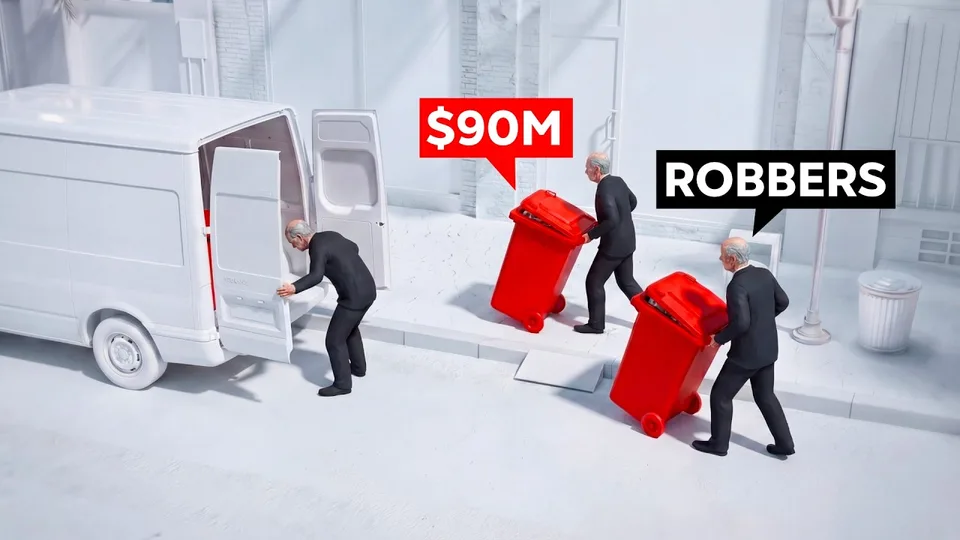
The cleanest example sits on Outplayed, our heists channel. "The Grandpas Who Pulled Off the Biggest Burglary EVER" (286K views) ran at roughly 2.5x that channel's ~113K average. The title does three things at once: a specific protagonist, an ironic contradiction, and a superlative the film actually backs up.
Look at our top films network-wide and the pattern repeats: "The ONLY Person Who Survived 133 Days Stranded at Sea" (475K), "The Man Who Escaped a Nazi Camp and Returned to Save 100 Men" (443K), "The Man Who Tricked the Police into Robbing Millions" (422K). Every single one names a human being and a stake. Not an event, not an institution, not a year — a person.
So when people ask what doubled for us, that's the answer: person-first packaging with concrete stakes. The story can be about an agency, a heist, or a war, but the title and thumbnail must be about someone.
What flopped — and why we keep every failure public
Our flops shared a fingerprint too. Films framed around institutions or events instead of people consistently landed under the catalog average. So did titles that summarized the story instead of opening a loop — if the title answers the question, nobody needs the video.
The most expensive category: stories we loved but couldn't package. Every Blackfiles film takes 16–20 hours of research before a single frame is rendered, and a flop costs exactly the same to produce as a hit. That forced a rule we no longer break: the title and thumbnail get pressure-tested before research begins, not after the film is done.
We never delete underperformers. They keep collecting long-tail search traffic, they feed session time, and they're the control group that makes a data review like this possible. A flop you deleted is a lesson you paid for and then threw away.
How the format evolved video by video
Episode one and episode 126 are recognizably the same channel — and completely different films. Runtime settled into a 20–37 minute band, but we learned the hard way that length has to be earned by story density. We cut a film to 22 minutes as readily as we let one breathe at 37, because padding for watch time trains your audience to stop clicking.
The research bar kept rising. Those 16–20 hours per film became our moat, because viewers in the espionage and cybercrime space punish sloppiness in the comments within hours. Getting the details right turned our comment section from a liability into a fact-checking community.
Visually, we committed early to original 3D animation and zero stock footage, and never wavered across all 126 videos. That decision looked expensive at video ten; by video fifty it was the brand, and viewers recognize a Blackfiles frame in the feed before they read the title. The voice evolved too — we direct the AI narration like a performance now, read by read, instead of accepting the first take.
None of this scales by hand. Sustaining weekly-or-better output forced us to build our own tools: Scriptwriter to turn research into drafts, Vertex to run the generative image and video pipeline, Cortex to orchestrate production across a ~25-person team, and Thumbnailer as a dedicated packaging lab. The format evolved because the infrastructure under it did. We also pushed Blackfiles onto Spotify, because a well-narrated documentary travels as audio almost for free.
Seven lessons we'd hand a new channel
- The catalog beats the hit. Our #1 video is only ~15% above our average; consistency built 436K subscribers, not an outlier.
- Name a person in the title. Every top film across our network puts a human and a stake front and center.
- Package before you produce. A flop costs the same 16–20 research hours as a hit, so pressure-test titles first.
- Earn your runtime. 20–37 minutes works when the story is dense; padding teaches viewers to leave.
- Pick a visual identity and refuse to break it. Zero stock footage across 126 videos made the brand.
- Keep your flops public. They're long-tail traffic and your only honest control group.
- Build systems before you need them. Weekly cadence for 16 months is an infrastructure problem, not a motivation problem.
If you want the full system behind these lessons — research, packaging, pipeline — we teach it inside Sentris Academy (Blueprint at $997, Studio at $1,997 with weekly team calls until your first 100K). But everything above is free, and it's the 80%.
FAQ: lessons from 126 YouTube videos
How fast did Blackfiles grow? From zero in February 2025 to 436K subscribers and 53 million views by mid-2026, across 126 videos. The curve was driven by cadence and packaging, not a single breakout — our top film holds 482K views, barely above the channel average.
When does a documentary channel start earning? As of 2026, YouTube's Partner Program publicly requires 1,000 subscribers plus 4,000 watch hours (or 10M Shorts views). Long-form documentary formats typically clear the watch-hour threshold faster than most niches because of episode length. That's public information, not financial advice.
Do you need 126 videos to see these patterns? No — our core packaging lessons were visible within the first few dozen uploads. But the confidence to bet a 25-person team on those patterns came from watching them hold across a full catalog.
What would you do differently from video one? Pressure-test packaging before research starts, commit to the visual identity immediately, and treat every flop as paid-for data instead of a failure to hide.
Want the whole system, not just the notes?
The Sentris Academy is the operating manual behind our 500K+ subscriber network — every stage of the pipeline this article comes from.