YouTube Video Title Strategy: Anatomy of a Viral Documentary
A title is not a label. It's the highest-leverage decision in a documentary's entire production — and most creators spend less time on it than on their outro. At Sentris Media Group we've produced 200+ films across four YouTube channels, and the pattern is brutal: the title decides whether 16-20 hours of research ever gets watched.
So we audited our own catalog. We pulled our four most-viewed films — 1.8 million combined views — and reverse-engineered the YouTube video title strategy connecting them. No guru theory. Just patterns extracted from titles that actually performed, and the rules we now apply to every weekly upload.
Why a YouTube Video Title Strategy Decides Everything
Here's the uncomfortable truth about faceless YouTube: the algorithm doesn't rank good films. It ranks good packaging, then checks whether the film keeps the packaging's promise. If nobody clicks, retention never gets a vote.
Our survival channel Outlived proves it. The channel has 7.8K subscribers and 837K lifetime views — yet one film, "The ONLY Person Who Survived 133 Days Stranded at Sea," pulled 475K views on its own. That is more than half the channel's entire view count from a single title. Subscriber count didn't do that. Packaging did.
That's why we treat the title as a contract. It makes a specific promise, and a 20-to-37-minute film has to keep it. Get the promise wrong and the best animation in the world won't save you.
Four Titles, 1.8 Million Views: The Case Studies
These are the four most-viewed films in the Sentris catalog. Different niches, different channels, same anatomy.
"The FBI Agent Who Warned Everyone About 9/11" — 482K views, Blackfiles. It opens with a character, not an event. It borrows stakes the viewer already carries — 9/11 needs zero explanation. And it withholds exactly one thing: what happened to the warning. That open loop is the click.
"The ONLY Person Who Survived 133 Days Stranded at Sea" — 475K views, Outlived. "Months at sea" is a story; "133 days" is a fact. The number signals research, and ONLY certifies uniqueness — this happened to exactly one human being, and you can't get the story anywhere else. Specificity is what separates a claim from clickbait.
"The Man Who Escaped a Nazi Camp and Returned to Save 100 Men" — 443K views, Breakfiles. This is a two-act title. Escaping a Nazi camp would carry a film by itself — then "returned" breaks the survival pattern your brain expects. The "100 men" quantifies what going back was worth.
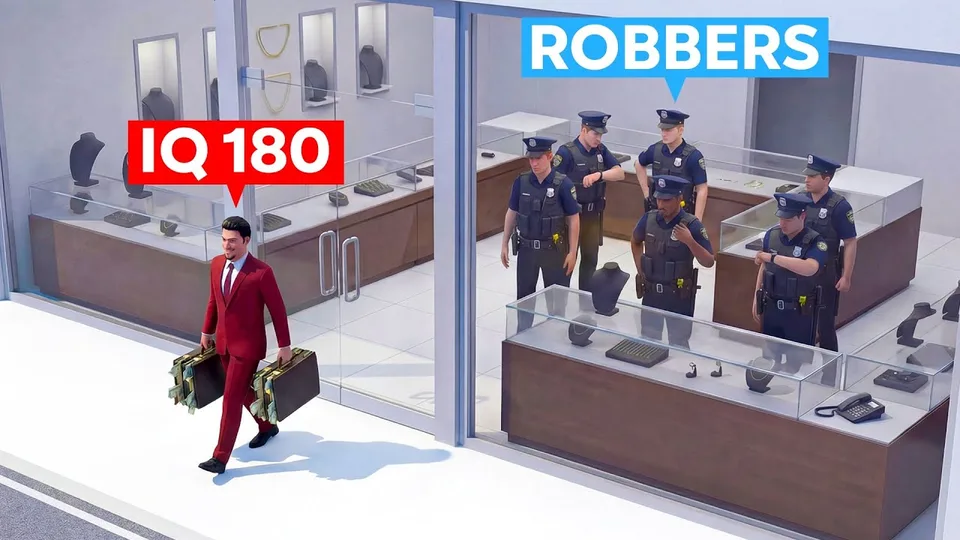
"The Man Who Tricked the Police into Robbing Millions" — 422K views, Outplayed. Pure inversion. Police stop robberies; this title makes them commit one. A paradox the viewer can't resolve without clicking is the strongest curiosity gap there is — as long as the film actually resolves it.
The Five Patterns Every Viral Documentary Title Shares
1. Character-first framing. All four titles start with a person: the FBI agent, the ONLY person, the man. Not "How the FBI Missed 9/11" — you can't root for a system. Documentaries are about people, and titles should be too.
2. Superlative specificity. Vague superlatives read as hype; specific ones read as evidence. Our Blackfiles film "The Grandpas Who Pulled Off the Biggest Burglary EVER" (286K views) works because "grandpas" is a concrete, verifiable absurdity — the superlative is anchored to something real.
3. Real numbers. 133 days. 100 men. 9/11. A number is proof you did the work before the viewer pressed play. We spend 16-20 hours researching each film before a script exists, and a real chunk of that time is hunting for the one number a title can carry.
4. ONLY and EVER — earned intensifiers. Two of our four biggest films use them. They work because they're literally true: there genuinely was only one survivor. Use an intensifier you can't defend and you've traded one click for the audience's trust.
5. Curiosity gap with stakes attached. A gap alone is a riddle; a gap plus stakes is a need. "Warned everyone about 9/11" tells you exactly what's at stake and refuses to tell you the outcome. Known stakes, unknown resolution — that combination is the engine inside all four titles.
Do This, Not That: Our Title Rules
After 200+ films, these are the rules we hold every title to before it ships.
- Do lead with a person — "The Man Who…" beats event-first framing every time
- Do anchor the title to one specific, verifiable number or detail
- Do make a single claim that sounds impossible but is documented fact
- Do reserve ONLY and EVER for claims you can literally prove
- Do write 10+ title options before scripting, then pick the one the film can actually deliver on
And the failure modes we see constantly across the faceless-documentary space:
- Don't summarize the plot — a summary answers the question the title should be asking
- Don't stack two hooks in one title; split them into two films
- Don't use empty superlatives like "insane" or "unbelievable" — they carry zero information
- Don't overpromise; a stretched title spikes clicks, kills retention, and the algorithm reads that as a defect
- Don't stuff in names and dates nobody searches for — documentaries win on browse and suggested, not search
Building Titles Into Your YouTube Video Title Strategy
We write titles before we write scripts. The title is the promise; the script is the proof. If research can't surface a title that clears the bar, the topic gets cut — no matter how much we personally like the story.
Titles also never ship alone. Every title gets paired with thumbnail concepts and run through Thumbnailer, our in-house thumbnail testing and generation tool, because title and thumbnail are one unit of packaging. The thumbnail carries the emotion, the title carries the claim, and they should never repeat each other.
Then the film has to keep the contract. Our episodes run 20-37 minutes of original 3D animation, and a title like "Tricked the Police into Robbing Millions" sets a question the film must answer beat by beat. This packaging-first system is the same one we teach inside Sentris Academy — because the title isn't marketing for the film. It's the first frame of it.
FAQ: Documentary Title Questions We Actually Get
How long should a YouTube documentary title be? Put the character and the claim in the first 50-60 characters so the hook survives truncation on mobile and in suggested feeds. Every case study above front-loads both.
Should you write the title before the script? We do, every time. A title written after the script describes the film. A title written before it shapes the film around a promise viewers actually want kept.
Do these patterns stop working once everyone copies them? The formats are copyable; the specifics aren't. "133 days" and "returned to save 100 men" came out of 16-20 hours of research per film. The pattern is free — the detail that makes it land has to be earned.
Is using ONLY or EVER just clickbait? Only if it's false. When the claim is documented — one survivor, 133 days — the intensifier is information, not hype. The line between clickbait and a great title is whether the film pays it off.
Want the whole system, not just the notes?
The Sentris Academy is the operating manual behind our 500K+ subscriber network — every stage of the pipeline this article comes from.